The Best Digital Marketing Tools for Businesses
August 2026
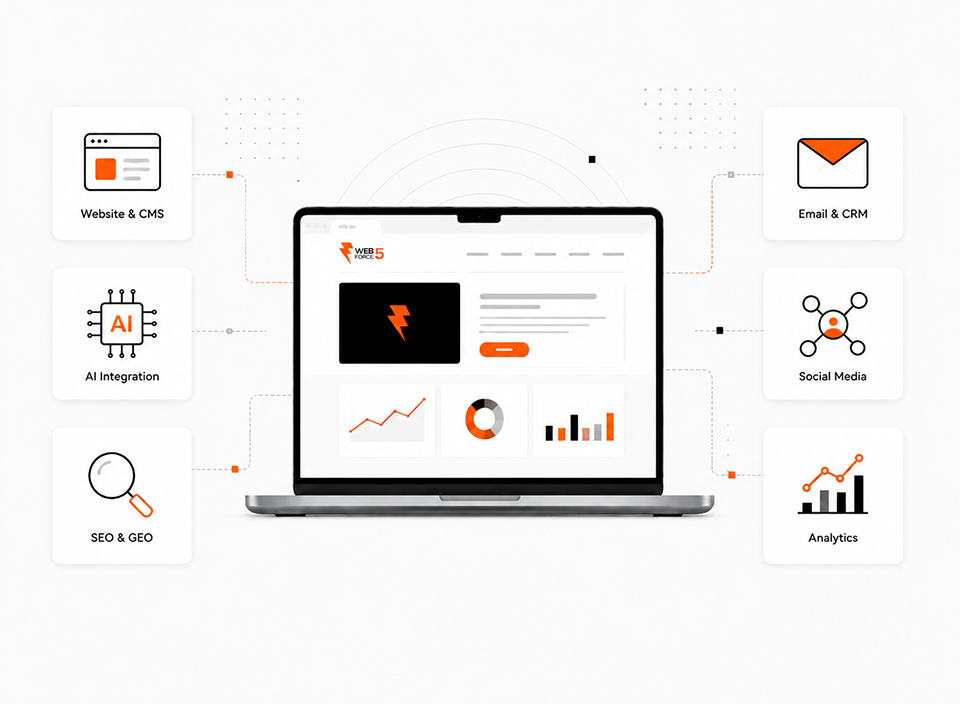
In the modern digital landscape, building a website is not just about having a presence online-it is about the whole package. To succeed in 2026, IT leaders, marketing directors, and finance managers in Australia and the USA need a cohesive tech stack that spans excellent website design, rigorous website development, and a strategic approach to digital marketing.
The pressure to perform is intense. Many marketing budgets are flatlining, meaning CMOs often have insufficient budget to execute their strategy effectively. At the same time, marketers are expected to deliver significant, AI-enabled transformation to maximise this constrained budget.
To achieve these goals, you need to invest in the right marketing technology. Here are some of the best digital marketing tools available for businesses in 2026, categorised by their function.
1. Website Building and Content Management
Your digital marketing strategy is only as strong as the platform it is built on. Without a robust foundation, all other marketing efforts will underperform. Because marketing technology accounts for a significant portion of marketing budgets (roughly 20-30%), choosing a platform that delivers comprehensive value is essential.
- Continuum: At Web Force 5, we have developed Continuum. This proprietary content management system is designed for businesses that want a powerful, intuitive platform without the overhead of custom coding. It is extremely easy to use, requires no technical knowledge, and features extensive built-in functionality, including Ecommerce, CRM, and email marketing.
Our local team constantly upgrades Continuum, ensuring it remains affordable yet highly capable. Because it is a comprehensive solution, we focus on Continuum rather than basic DIY platforms like Squarespace or Weebly, which can lack the necessary website security and support for B2B organisations.
- BigCommerce: This platform is excellent for mid-to-large businesses looking for an open SaaS solution. BigCommerce balances powerful out-of-the-box ecommerce features with the ability to integrate deeply with third-party ERP and CRM systems.
- Shopify (and Shopify Plus): Renowned for its user-friendly interface and massive app ecosystem, Shopify is a popular choice for fast-moving ecommerce brands. The "Plus" tier caters to enterprise volume and complex wholesale requirements.
- WordPress: The world's most popular CMS remains highly relevant. With its massive plugin architecture (including WooCommerce for ecommerce), WordPress is incredibly flexible, though it requires proactive maintenance to ensure stringent website security.
Regardless of the platform, at Web Force 5, every client receives a custom-designed website and a dedicated account manager to provide ongoing feedback and guidance to improve performance.
2. Artificial Intelligence Integration
AI is no longer an experimental channel; it is central to marketing operations and is consuming a growing percentage of marketing budgets.
- OpenAI (ChatGPT Enterprise): For drafting marketing copy, generating ideas, and conducting initial market research, ChatGPT is a foundational tool. The Enterprise version ensures data privacy for corporate users.
- Jasper / Copy.ai: These AI writing assistants are specifically trained on marketing frameworks. They are excellent for generating ad copy, email sequences, and blog outlines quickly.
Midjourney / Adobe Firefly: For visual content creation, these tools generate high-quality, brand-safe images based on text prompts, dramatically reducing the time and cost associated with traditional graphic design.
3. SEO and Generative Engine Optimisation (GEO)
Search behaviour is undergoing a massive shift. Buyers are now asking AI before they ever visit your website, getting recommendations from platforms like ChatGPT, Gemini, and Perplexity instead of traditional search. This means your tech stack must cater to both traditional Search Engine Optimisation (SEO) and the emerging field of Generative Engine Optimisation (GEO).
- Ahrefs / Semrush: These remain the gold standard for traditional SEO. They allow you to track keyword rankings, analyse competitor backlink profiles, and conduct technical site audits to ensure your website development aligns with search engine guidelines.
- ConvertMate / Omnibound / HubSpot AEO: New platforms are emerging to help track how often your brand is cited in AI summaries. This is crucial. HubSpot, for instance, has released specific Answer Engine Optimization (AEO) tools to track brand visibility and share of voice across multi-engine AI platforms.
- Screaming Frog: An essential desktop program for IT and marketing teams to crawl websites and identify critical technical SEO issues, such as broken links or missing meta data.
4. Email Marketing and CRM Automation
Email remains one of the most reliable channels for B2B communication and lead nurturing.
- HubSpot: A comprehensive inbound marketing platform. It combines a powerful CRM with advanced email marketing, social scheduling, and landing page creation. It is ideal for teams that want all their data in one place.
- Klaviyo: Highly recommended for ecommerce businesses, Klaviyo integrates deeply with platforms like Shopify and BigCommerce to trigger automated email flows based on very specific customer behaviours.
- Mailchimp: A great starting point for smaller businesses, offering intuitive drag-and-drop email design and basic automation features.
5. Social Media Management
Social media strategy is crucial for both brand awareness and customer service.
- Sprout Social: A premium tool that provides deep analytics, unified inbox management, and excellent team collaboration features. It is well-suited for mid-to-large organisations.
- Hootsuite: One of the most established platforms, Hootsuite allows you to schedule posts across multiple networks and monitor brand mentions from a single dashboard.
- Buffer: Known for its clean, simple interface, Buffer is excellent for streamlined scheduling and basic performance tracking.
6. Analytics and Conversion Tracking
You cannot improve what you cannot measure.
- Google Analytics 4 (GA4): The industry standard for tracking website traffic, user engagement, and conversion events. GA4 relies heavily on machine learning to provide insights into user journeys.
- Hotjar / Crazy Egg: These tools provide heatmaps and session recordings, showing you exactly how users interact with your website design. They highlight where users click, scroll, and ultimately drop off.
- Looker Studio: A powerful data visualisation tool that pulls information from various sources (like Google Ads, GA4, and your CRM) into unified, easy-to-understand reports for the finance and leadership teams.
The Right Stack for the Right Strategy
The sheer volume of digital marketing tools available can be overwhelming. However, the most successful businesses do not use every tool; they select a stack that seamlessly integrates with their core platform and aligns with their strategic objectives.
If you are evaluating your current tech stack or looking to build a new, high-performing website that leverages the latest in AI and digital marketing, the team at Web Force 5 is here to help. Contact us today for a free, no-obligation chat to discuss your digital roadmap.